
How Self-Funded Employers Can Use Data to Lower Costs and Improve Population Health
An increasing number of self-funded employers are prioritizing preventive care as a more effective path to improving population health. The system speaks for itself: Traditional care models often intervene too late, after high-cost events like emergency room visits or hospitalizations have already occurred. Employees are then left with a less-than-desirable healthcare experience from a reactive, fragmented model, while employers absorb the financial impact.
Claims data can change this dynamic by giving employers earlier visibility into the needs of their population. Leading organizations even go a step further by partnering with experts who can translate those insights into targeted action. With the right approach – and the right partner – employers can turn strategic insights into health strategies that optimize care, improve equity, increase engagement, and deliver value.
Short on time? We’ve got you covered. Here’s what you need to know:
- A small portion of an employer’s population drives the majority of healthcare spending.
- Claims data paired with predictive analytics enables employers to proactively flag high-risk individuals, uncover care gaps, address clinical needs, and improve health disparities.
- Improving an organization’s ROI requires data-driven and personalized member engagement, alongside a system-wide shift to proactive, advanced primary care.
- The right partner combines actionable data insights with direct care delivery, enabling employers to intervene at the point of care, strengthen care coordination, integrate longitudinal health data, improve health outcomes, and drive stronger ROI.
What’s driving an employer’s high costs?
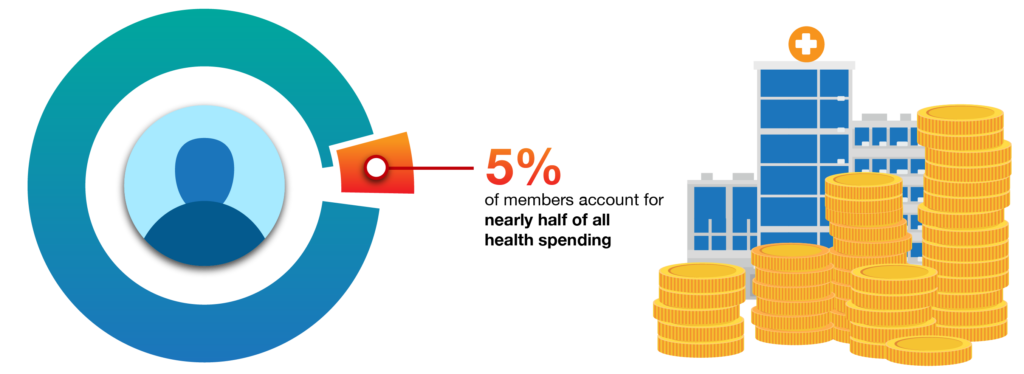
Here’s the traditional healthcare system’s best-kept secret: A small portion of the population drives the majority of healthcare spend. In 2023, just 5% of the population accounted for nearly half of all health spending, with average annual expenditures of $72,918, according to Kaiser Family Foundation. For self-funded employers, that cost is significant.
What’s behind this variation? Often, it’s a lack of preventive care that leads to the progression and compounding of chronic conditions. Many of the people who are at greatest risk and account for the majority of healthcare costs are not utilizing primary care. Instead, they rely on the emergency room as their first point of contact or juggle multiple specialists because they don’t have a relationship with a primary care provider to coordinate their care.
To get ahead of rising costs, employers must identify high-risk members early, before health conditions escalate.
How does claims data empower employers to support high-risk members?
One benefit of claims data is the ability to identify and support high-risk members. Who is considered “high-risk”? Individuals with chronic conditions, such as obesity, hypertension, or diabetes. But it’s important to consider the chronic conditions that are often overlooked, including migraines, asthma, or irritable bowel syndrome. Even mental health disorders such as anxiety and depression may be considered chronic. These conditions can result in decreased productivity, missed workdays, poor health outcomes – and they drive higher utilization of urgent and emergency care.
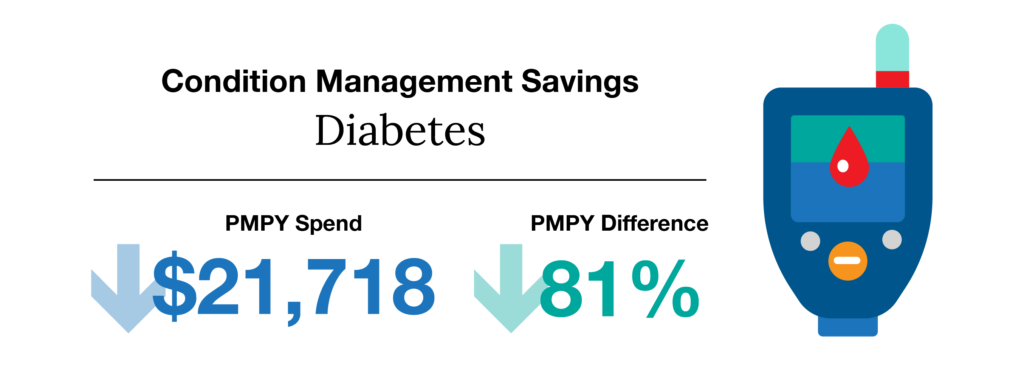
Focusing on prevention and high-quality care delivery translates into substantial cost savings. The more likely an employee goes to their wellness center for a preventive visit, the less likely their employer has to pay for emergency care. For example, when members manage diabetes with Premise care teams, organizations see an 81% lower per-member-per-year-spend, which is over $21,000 in savings.
How can employers close gaps in care and improve population health?
Data is like a magnifying glass: it helps employers identify who needs care and where gaps exist. With the right partner, organizations can surface missed preventive screenings, delayed diagnoses, and medication adherence issues. These can not only escalate into costly health events if left unaddressed but also lead to poor health outcomes that impact entire families and communities.
But with claims data, care teams can support members with staying on schedule with their medications, recommending needed vaccinations, or encouraging primary care provider attribution. These actions play a major part in improving health outcomes.
Just as importantly, data can reveal which populations are less likely to access services. Differences tied to social drivers of health like geography, income, race, ethnicity, or job type can highlight where barriers to care exist and where more targeted support is needed. Care managers are crucial actors in these efforts, as they can connect employees to community resources like housing, food, and transportation. For example, if claims and engagement data show that an hourly employee at a rural worksite is consistently missing their preventive screenings, a care manager can step in to identify barriers like limited transportation or an inflexible work schedule and connect that employee to virtual care options or more convenient appointment availability.
Together, these insights reveal what is going on with the health of an employer’s population. By applying data through an equity lens, organizations can design interventions that meet members where they are and ensure more consistent access to high-quality care. The result? Healthier people who are more productive at work and who are more available for their loved ones at home.
Where does member engagement meet data?
Even the strongest data strategy falls short without meaningful member engagement. To drive action, employers need targeted outreach that connects with individuals at the right moment in their healthcare journey.
Organizations who use claims data are able to meet members where they are with the right message at the right time — whether they need a preventive screening, chronic condition support, a follow-up visit, or to establish a relationship with a primary care provider. These insights also help employers tailor how their messages are delivered, as they can inform outreach strategies across channels like email, text, digital campaigns, workplace promotions, manager communications, and incentive programs based on the unique needs and behaviors of different employee populations.
When done well, this approach to closing care gaps does more than reduce costs; it improves health outcomes and builds trust. Members who feel supported in their care journey are more likely to stay engaged with their wellness center. And that engagement directly impacts ROI, as it drives utilization of high-value care and reduces avoidable high-cost services. Over time, this leads to a healthier population and sustainable cost savings.
How can employers continuously measure and refine impact on population health?
Impacting population health is not a one-time initiative; it requires ongoing evaluation and refinement. By establishing clear benchmarks across cost, utilization, and health outcomes, employers can track performance and adjust strategies in real time.
A trusted healthcare partner plays a critical role in this process. By translating complex data into clear, actionable insights, they help employers understand what’s working and where there are opportunities to improve. This might mean adding a service line based on the needs of the population, like offering free or low-cost behavioral health therapy, expanding access to primary care through virtual appointments, or deploying targeted member outreach to increase wellness center engagement. This ensures that population health strategies remain aligned with both organizational goals and member needs.
Employers that embrace data-driven population health strategies gain a measurable advantage: identifying risks earlier, closing care gaps more effectively, improving health outcomes, and increasing return on investment. With the right data, it’s possible to better an employer’s bottom line and, most importantly, their people.
Curious what your claims data could be telling you? Turn those insights into action — get in touch with Premise today.
Next on industry insights.
Technological Innovation at Premise: A Conversation with Laurel Cipriani, MSc, MSN
Read the Blog
4 Myths Benefits Leaders Believe About AI – and How to Dismantle Them
Read the Blog