

Why Healthcare Design Matters: How Evidence-Based Clinics Improve Outcomes, Experience, and Cost
Research indicates the design of healthcare spaces impacts healing. The physical environment affects everything from patient stress and safety, staff effectiveness, and quality of care. As employers and health plan sponsors look for ways to create more personalized, intuitive healthcare experiences, thoughtful health center design has become an important differentiator.
This goes far beyond aesthetics. Every aspect of a healthcare environment, from the layout of a waiting room to the amount of natural light in an exam space, can shape how patients feel and interact with their care. Evidence-based healthcare design uses research-backed principles to create environments that help people feel more comfortable and engaged. For employers and health plan sponsors, those design choices can ultimately help drive better outcomes, stronger member engagement, and a better return on investment.
What is evidence-based healthcare design?
Evidence-based healthcare design refers to creating an environment that achieves the best possible healthcare outcomes. It’s based on credible research about how different interior design elements impact things like mood, stress, and a patient’s overall experience. Everything from the paint color on the walls to the air filtration and accessibility features can impact the employee healthcare experience. When things like the flow of a waiting area and the efficiency of an exam room are carefully considered, wellness centers turn from a place to receive care to a place people want to experience care.
Key elements of evidence-based healthcare design
Evidence-based design considers a few key design elements, including:
- Signage and layouts: Clear, easy-to-understand signage and intuitive pathways help prevent patient confusion and anxiety over navigating unfamiliar surroundings.
- Plants and natural light: Bringing the outside environment into direct primary care design can alleviate anxiety and positively influence patients’ psychological and physiological responses.
- Acoustics: Quieter environments, made possible with sound-absorbent materials, can reduce stress and make it easier for both patients and providers to have private conversations.
- Color palettes: Soft blues are associated with calmness, serenity, and trust. Greens represent nature and are known to promote health, harmony, growth, and tranquility. Both colors are common in healthcare settings that follow evidence-based healthcare design.
- Family-friendly spaces: Having dedicated areas and ample space for family and friends to offer their support helps foster emotional wellbeing for patients.
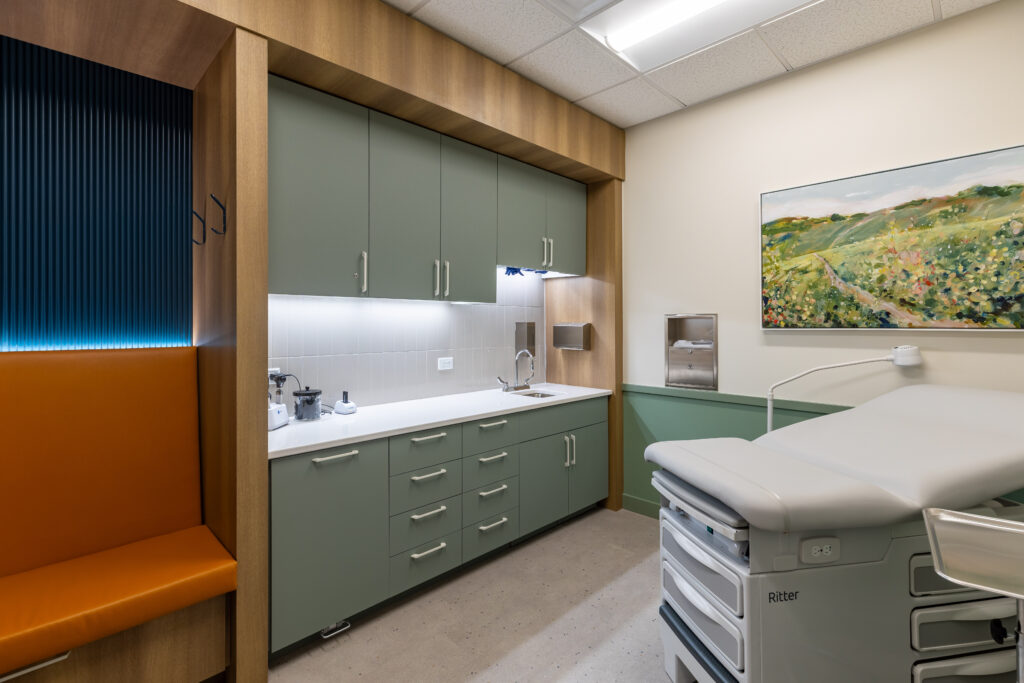
This Premise wellness center for a window and door manufacturing company showcases a warm color palette and calming artwork
How healthcare design impacts patient outcomes and experience
An employee’s healthcare experience matters. Positive healthcare experiences build trust, strengthen engagement, and empower care teams to deliver their best work — contributing to better patient outcomes. Healthcare design can directly impact those patient outcomes.
For example, intentional design can promote patient-provider collaboration through dedicated care suites for consultation or exams. Exam spaces are used in the traditional sense to provider care, while the consultation is crafted to encourage open dialogue. Strategically placed technology, like wall-mounted monitors, allows patients and providers to look at screens together, fostering a sense of teamwork.
Evidence-based design can make members feel safer, more trusting, and more engaged in their care. All of this empowers them to play a more active role in their healthcare and be more receptive to recommendations offered by their providers. Associating the doctor’s office with positive experiences is also incredibly important to increasing healthcare utilization. If we’re able to change the narrative some may have in their head about what going to the doctor is really like, they’re more likely to come in, come back, and tell others.
Why evidence-based design matters for employers and health plan sponsors
There are many benefits of healthcare facility design for employers and health plan sponsors. When patients are more receptive to their care plan, they are much more likely to adhere to that plan. Better adherence means better outcomes for them and lower healthcare costs for their employer.
Creating a welcoming environment is just as important for creating better member experiences as it is for achieving better health outcomes. One great experience could be the reason a member finally gets an overdue colonoscopy and catches cancer early. Or could be how they learn about the dangers of heart disease and create a plan to lower their blood pressure. Catching these conditions early can lead to cost reduction down the line by avoiding costly specialty care or the emergency room.
Real-world examples of evidence-based clinic design
Premise is the only direct healthcare company to have an evidence-based design accredited and certified architect in house. Here are a few real-world examples of design elements we incorporate into our wellness centers:
- A warm welcome area to make the right first impression
- Well thought out member path from the welcome area to the care suite created with subtle, calming artwork
- HIPAA-compliant offstage provider collaboration area for our center teams to gather, which helps increase face-to-face communication between all members of the care team
- Concepts that keep members present before their visit begins, like light, color, and angles
These elements come through in all our designs as our architect works to customize each wellness center to fit each organization’s unique culture. Whether it’s designing the exterior and interior to look and feel just like a large outdoors store or including personal photos that honor a union’s history, we want the environment to feel familiar, safe, and relaxing.
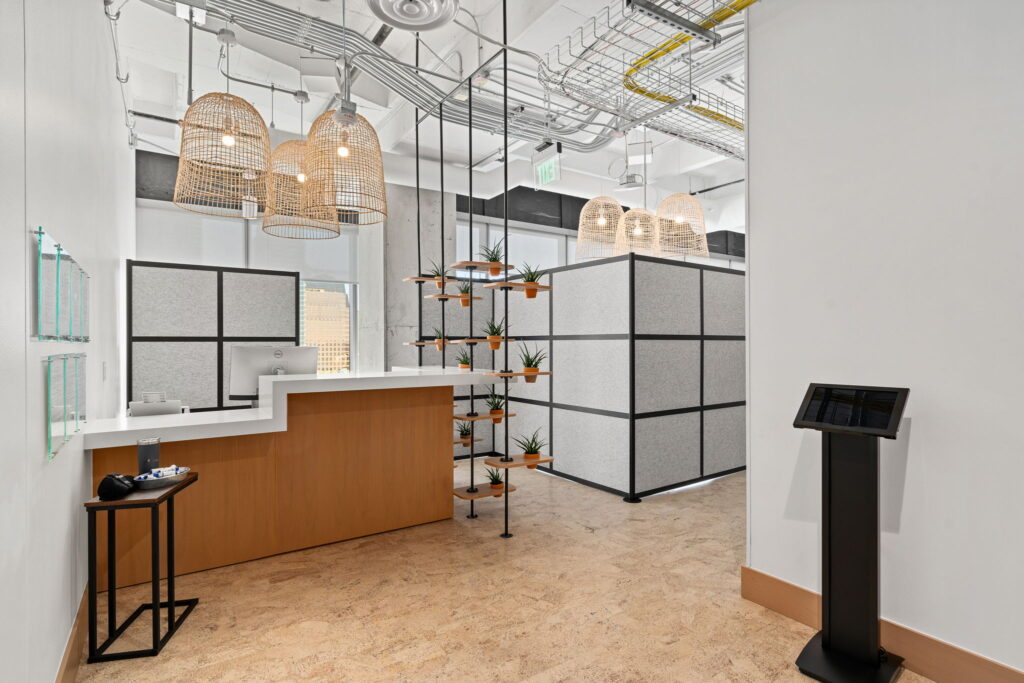
In Austin, Texas, the warm welcome area in this wellness center is designed with unique angles and makes the right first impression for Premise members
FAQ: Evidence-based healthcare design
Q: Does healthcare facility design really impact patient outcomes?
A: Yes. Research has consistently shown that healthcare environments can influence patient stress, anxiety, satisfaction, and even recovery. When spaces are designed with the patient experience in mind, people are often more willing to ask questions, participate in conversations about their health, and follow through on care recommendations. Those seemingly small interactions can add up to better engagement and better outcomes over time.
Q: How does clinic design affect employee healthcare utilization?
A: Clinic design can have a major impact on whether employees choose to seek care in the first place. Spaces that feel welcoming, easy to navigate, and centered around the patient experience can help reduce some of the anxiety people often associate with healthcare visits. When employees have positive experiences, they’re more likely to schedule preventive appointments, come back for follow-up care, and build ongoing relationships with their providers.
Q: What are examples of evidence-based design in healthcare?
A: Evidence-based healthcare design incorporates features that research has shown can improve patient wellbeing and experiences. Common examples include:
- Intuitive layouts and clear signage that make spaces easier to navigate
- Sound-absorbing materials that create quieter, more private environments
- Calming color palettes that promote comfort and trust
- Family-friendly spaces that encourage support and connection
- Dedicated provider collaboration spaces that support care coordination while protecting patient privacy
Q: Can better clinic design reduce healthcare costs for employers?
A: While clinic design isn’t a direct cost-saving strategy on its own, it can support behaviors that lead to lower healthcare costs over time. When employees feel comfortable accessing care, they’re more likely to get preventive screenings, manage chronic conditions, and follow through on provider recommendations. Those actions can help reduce avoidable emergency room visits and costly complications down the road.
Where members receive care matters. Their experience at the wellness center can influence both their health outcomes and an organization’s healthcare costs. For employers and health plan sponsors, investing in evidence-based healthcare design isn’t just about creating an attractive space. It’s about creating an environment that helps people feel comfortable, supported, and motivated to take an active role in their health.
Premise is ready to build you a wellness center that delivers exceptional experiences and meaningful results.
Next on industry insights.

Myth vs Fact: Choosing the Right Specialty Care
Read the Blog
Three Ways Unions Benefit from Care Navigation
Read the Blog